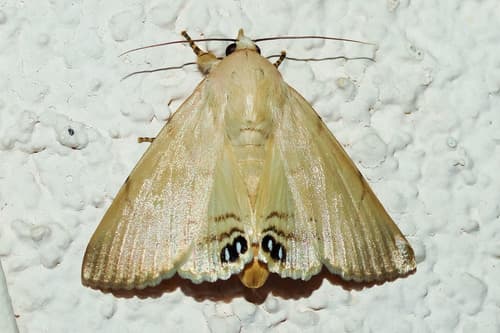
Palm Flower Moth
Common NamePalm Flower Moth
Scientific NameDuponchelia fovealis
FamilyCrambidae
SubfamilySpilomelinae
Wingspan (mm)20
Wing Patternspotted
Primary Colorspale yellow, brown, black, white
HabitatCultivated areas, greenhouses, gardens, nurseries
Geographic RangeWorldwide (invasive), native to Southern Europe and North Africa
Host Plantspalms, begonia, cyclamen, gerbera, poinsettia, bell pepper, cucumber, tomato, various ornamental plants and vegetables
Flight PeriodYear-round in greenhouses; multiple generations in warm climates
Conservation Statusleast-concern
Lifecycle NotesEggs are laid on leaves, stems, or soil. Larvae are cream-colored with dark spots and a dark head, feeding on roots, stems, and leaves. Pupation occurs in a silken cocoon in the soil or on the plant.
Identification TipsDistinguished by its small size, pale coloration, and especially the two prominent black, kidney-shaped markings (often with white centers) on the hindwings. The abdomen often curls upwards when at rest.
Description
A small, pale yellowish-brown moth with a slender body. Its forewings are light brown with faint markings, while the hindwings feature two prominent black, kidney-shaped spots, often with white centers, near the anal angle.