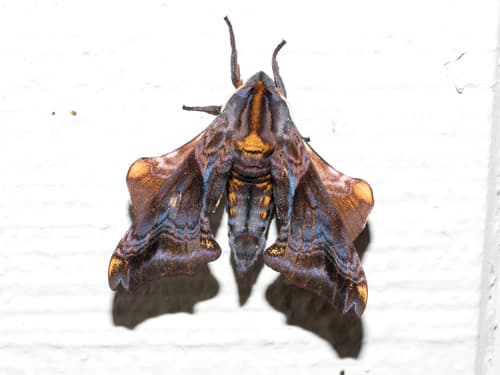
Small-eyed Sphinx
Common NameSmall-eyed Sphinx
Scientific NamePaonias myops
FamilySphingidae
SubfamilySmerinthinae
Wingspan (mm)60
Primary Colorsbrown, reddish-brown, blue-grey, orange
HabitatDeciduous woodlands, forests, orchards, suburban areas
Geographic RangeEastern North America, from southern Canada to Florida and west to the Great Plains
Host Plantswild cherry, plum, hawthorn, willow, birch, basswood
Flight PeriodMay to August (often two broods)
Conservation Statusleast-concern
Lifecycle NotesEggs are laid singly on host plant leaves. Larvae are green hornworms with white stripes, pupating in a shallow burrow underground before emerging as adults.
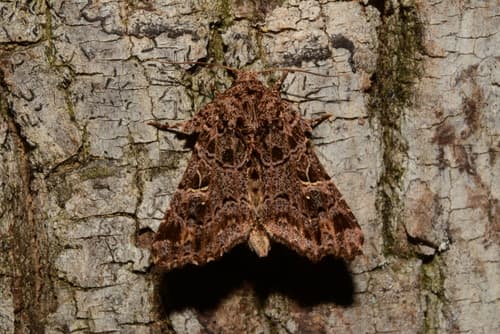
Identification TipsKey identification features include the scalloped forewing margins and the cryptic brown/purplish pattern. The most distinctive characteristic, though often hidden at rest, is the small, blue-centered black eyespot on each hindwing.
Description
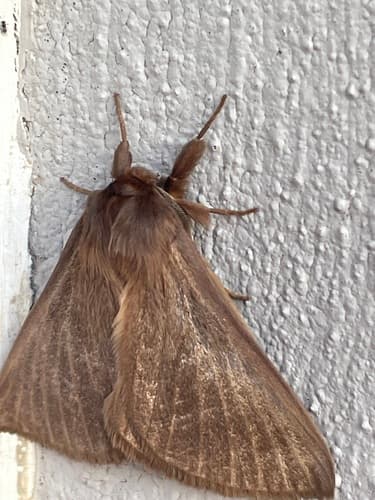
This moth displays broad, somewhat scalloped forewings with a cryptic, mottled pattern of reddish-brown, purplish-brown, and blue-grey wavy lines, providing excellent camouflage. Its robust body matches the forewing coloration, and hints of orange are visible on the hindwings.