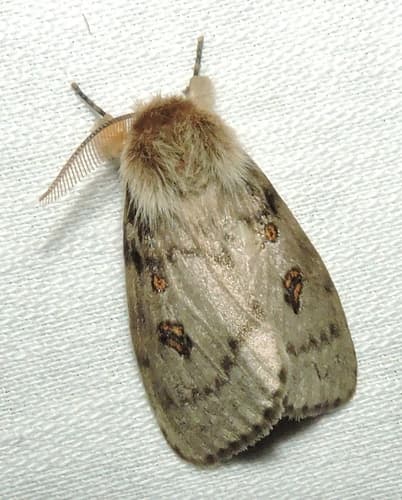
White Cedar Moth
Common NameWhite Cedar Moth
Scientific NameDasychira plagiata
FamilyErebidae
SubfamilyLymantriinae
Wingspan (mm)40
Wing Patternspotted
Primary Colorsgrey, brown, orange
HabitatConiferous and mixed forests, woodlands
Geographic RangeEastern North America, from Newfoundland west to Manitoba, south to Florida and Texas
Host Plantspine, spruce, fir, hemlock, white cedar
Flight PeriodJune to August
Flight Stylefluttering
Conservation Statusleast-concern
Lifecycle NotesLarvae are hairy tussock caterpillars, often with prominent hair tufts. They pupate in a cocoon, typically overwintering as an egg or young larva.
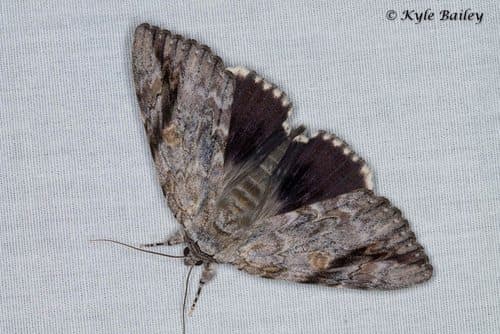
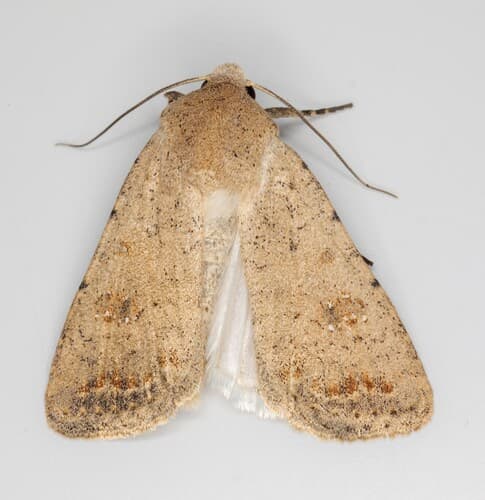
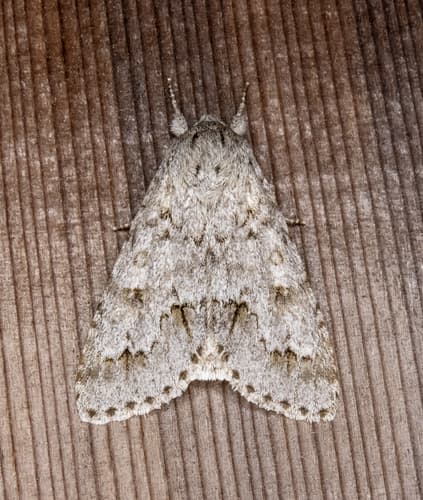
Identification TipsLook for the very furry body, strongly pectinate antennae (males), and the mottled grey-brown forewings with distinct dark brown or orange-brown spots. The overall 'tussock moth' appearance is characteristic.
Description
A medium-sized moth with a very hairy, light brown body and mottled grey-brown forewings featuring several distinct dark brown to orange-brown spots and faint wavy lines. Males have prominent bipectinate antennae.