Carnation Tortrix
Common NameCarnation Tortrix
Scientific NameCacoecimorpha pronubana
FamilyTortricidae
SubfamilyTortricinae
Wingspan (mm)11
Wing Patternsolid
Primary Colorsorange, brown
HabitatGardens, greenhouses, nurseries, agricultural areas, disturbed habitats
Geographic RangeNative to the Mediterranean region, now widespread in Europe, North Africa, parts of Asia, and introduced to North America (California, Pacific Northwest) and other regions.
Host PlantsDianthus caryophyllus, Rosa, Citrus, Prunus, Malus, Pyrus, Vitis, many ornamental plants
Flight PeriodMultiple generations, flying almost year-round in warm climates; typically spring to autumn in temperate regions.
Flight Stylefluttering
Conservation Statusleast-concern
Lifecycle NotesEggs are laid in batches on leaves. Larvae are polyphagous leaf-rollers, feeding on a wide variety of plants, and pupation occurs within the rolled leaves. It is a multivoltine species, completing multiple generations per year.
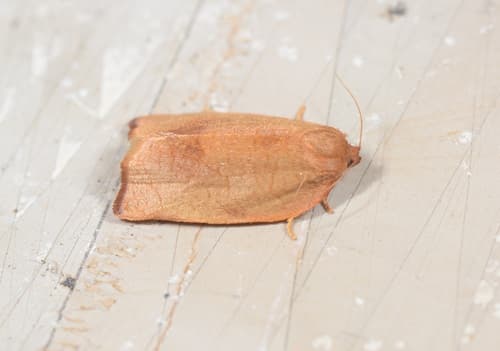
Identification TipsLook for the reddish-brown to orange-brown forewings, sometimes with a darker oblique band (though not always prominent). The bright orange hindwings are a key diagnostic feature, though not visible in this resting posture. It often rests with wings folded flat, giving it a somewhat triangular appearance.
Description
A small to medium-sized moth with reddish-brown to orange-brown forewings, often appearing plain or with subtle darker markings. The hindwings are typically bright orange.